

This project develops the Habit Awareness and Behavioural Intervention Training (HABIT) educational model through participatory workshops. The HABIT workshop integrates three evidence-based components: the Habit Loop framework to identify triggers, routines, and rewards patterns; structured quantitative and qualitative journaling pre and post workshop to encourage systematic reflection on automaticity and underlying personal and social motivations; and a future-self-letter writing activity that promotes long-term perspective and goal alignment.
————————————————————-
University of Leeds (Workshop 1)
Breaking the fashion habit: enabling consumers to make considered fashion purchases
This project is part of the Back to Baselines (B2B) fund from Leeds Institute of Textiles and Colour, School of Design, University of Leeds, United Kingdom. The fund involves collaboration with the University of Léon and the University of Savoie Mont Blanc, France. The fund is led by Ms Edel Moore (PI), Dr Rafiq Elmansy (Co-I), Prof. Carmen Santos, and Dr Marjan Vasirian (PDRA).
This project investigates fashion overconsumption as habitual behaviour and measures the impact of a habit-theory educational intervention in altering online fashion overconsumption among young adults in the UK and Europe. Understanding and influencing fashion overconsumption is not only relevant to personal well-being but also enables the UK fashion and textile sector to mitigate broader ecological and social challenges through informed decision-making and sustainability policy. The attitude-behaviour-gap theory illustrates that consumers can simultaneously hold pro-environmental beliefs while engaging in overconsumption. Analysis of participants buying data before, during and after post-workshop intervention explores this inconsistency. The research outcomes will aid UK businesses to counteract and compete with unsustainable business models through informed business strategy and innovation.
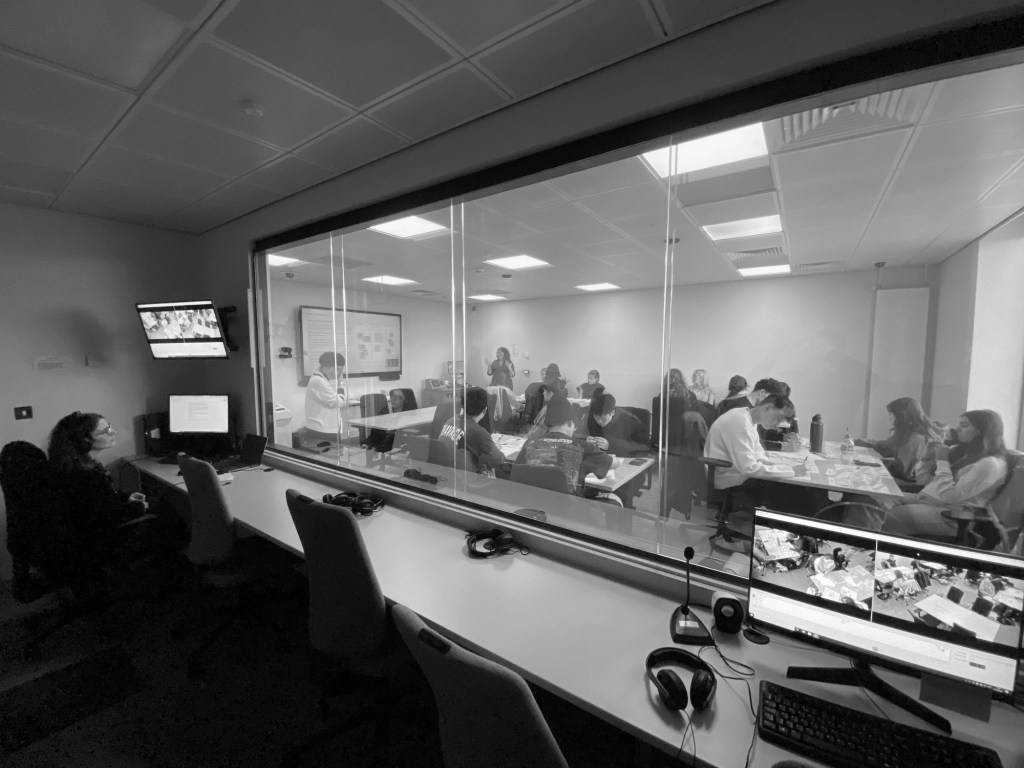
Two workshops were conducted as part of the B2B research. The first took place at the Behaviour Lab, Leeds University Business School, with 37 participants from the School of Design.
IAE Université Savoie Mont-Blanc (Workshop 2)
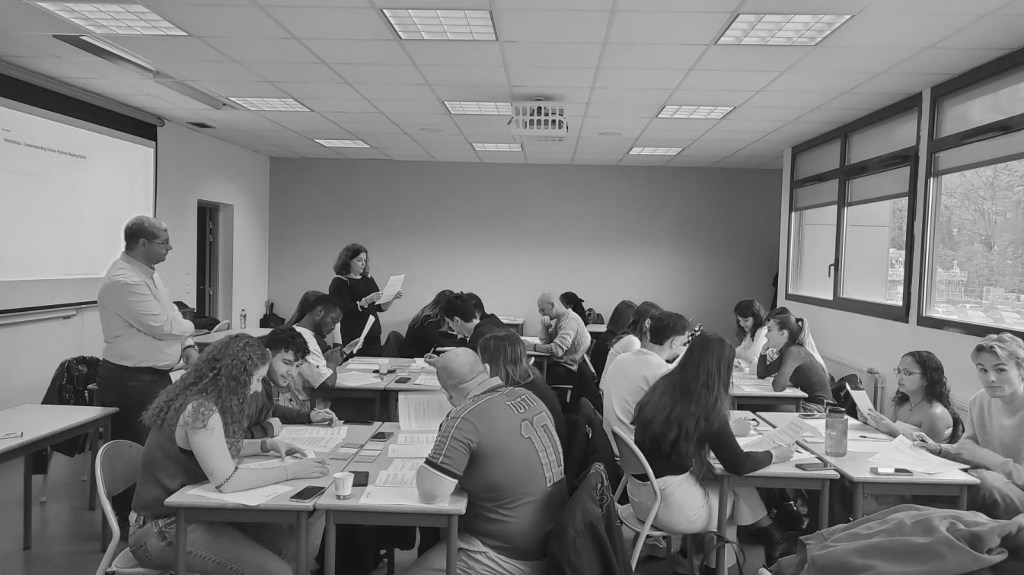
The second workshop was held at IAE Université Savoie Mont-Blanc in Annecy, France, and involved 20 European master’s students. In total, 18 UK-based and 18 EU-based participants successfully completed both pre- and post-intervention questionnaires, as well as psychoanalytic assessments specifically focused on online fashion buying behaviour.
The HABIT workshop integrates three evidence-based components: the Habit Loop framework to identify triggers, routines, and rewards in online fashion shopping patterns; structured quantitative and qualitative journaling pre and post workshop to encourage systematic reflection on automaticity and underlying personal and social motivations; and a future-self-letter writing activity that promotes long-term perspective and goal alignment. Pre- and post-workshop evaluations employed validated psychometric scales: the Self-Report Habit Index for measuring purchasing automaticity, the Pleasure, Arousal and Dominance Scale for assessing emotional shopping responses, and the Bergen Shopping Scale for evaluating problematic shopping tendencies
Although designed for young adults and fashion purchase, the training can be adapted for different demographics and overconsumption contexts.
Outcome
We are currently analysing the qualitative data using a reflexive thematic analysis approach and triangulating it with quantitative data collected through the PAD, SRHI, and Bergen scales, as well as participants’ shopping behaviour before and after the workshop. Initial findings indicate a decrease in spending (-28.3%) and a reduction in average time spent online from two hours to 45 minutes.
The PAD scale results suggest that participants gained greater control over their emotional purchasing habits after the workshop compared with their prior behaviour.
On the SRHI scale, improvements were observed in both self-identity and automaticity. In contrast, the Bergen Addiction Scale showed no significant differences, as participants did not display cases of online shopping addiction.
Further details about the workshops and their outcomes will be available on the Publication page.
What’s Next
Building on the success of the first workshop, we plan to extend the study to other behavioural activities, exploring how awareness can drive change and improve behaviours in areas such as healthcare, consumption, and beyond. If you are interested in research collaboration or in adapting our work within your business, we would be delighted to hear from you through the Contact us page.
 The HABIT Lab